

Can a mesh dryer be used for drying leather items? This is a question that many in the leather industry and those involved in drying processes often ponder. As a supplier of mesh dryers, I am well - versed in the capabilities and limitations of these machines, and I'm here to explore this topic in depth.
Understanding Mesh Dryers
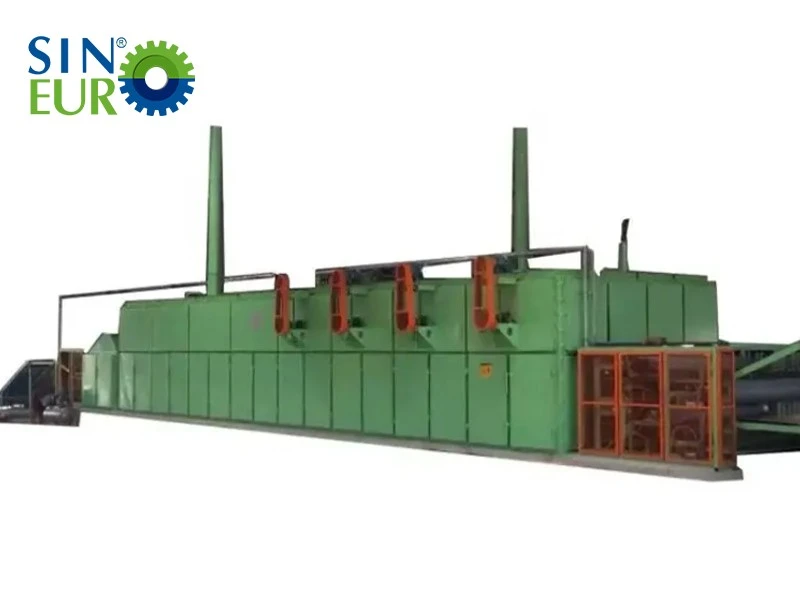
Mesh dryers, also known as mesh belt dryers, are a type of continuous drying equipment widely used in various industries. They consist of a conveyor belt made of mesh material that transports the items to be dried through a drying chamber. Hot air is circulated around the items on the belt, facilitating the evaporation of moisture.
Our company offers a range of mesh dryers suitable for different applications. For instance, the Face Veneer Mesh Belt Dryer is designed specifically for drying face veneers. It can provide uniform drying conditions, ensuring high - quality products. The Plywood Continuous Belt Drying Dryer Machine Wood Face is another excellent option for plywood drying, with its efficient drying process and reliable performance. And the Industrial Use Mesh Belt Dryer for Core Veneer is tailored to meet the needs of industrial - scale core veneer drying.
Characteristics of Leather Items
Leather is a natural material with unique properties. It is porous, which allows it to absorb and retain moisture. However, leather also needs to be dried carefully to avoid damage. If leather is dried too quickly or at too high a temperature, it can become brittle, lose its flexibility, and develop cracks. On the other hand, insufficient drying can lead to mold growth and a shorter lifespan of the leather item.
Advantages of Using Mesh Dryers for Leather Drying
- Uniform Drying
Mesh dryers offer uniform air distribution across the leather items. The mesh belt allows hot air to flow through from all sides, ensuring that every part of the leather is exposed to the drying air. This results in consistent drying, reducing the risk of uneven moisture content in the leather. For example, in a large - scale leather production, a mesh dryer can ensure that all leather pieces, whether they are small wallets or large jackets, are dried evenly. - Controlled Drying Conditions
Most modern mesh dryers come with advanced control systems. You can precisely adjust the temperature, air velocity, and drying time according to the type of leather. Different types of leather, such as cowhide, sheepskin, or pigskin, have different moisture - holding capacities and drying requirements. With a mesh dryer, you can customize the drying process to suit each type of leather, preventing over - or under - drying. - Continuous Operation
Mesh dryers are designed for continuous operation, which is highly beneficial for mass production in the leather industry. Once the drying parameters are set, the leather items can be continuously fed onto the mesh belt, and the dried products are continuously discharged at the other end. This saves time and labor compared to batch - type drying methods.
Challenges and Considerations
- Temperature Sensitivity
Leather is sensitive to high temperatures. As mentioned earlier, excessive heat can damage the leather. Therefore, when using a mesh dryer for leather drying, it is crucial to keep the temperature within a safe range. Generally, the drying temperature for most leathers should be between 40 - 60 degrees Celsius. If the temperature is too high, the leather's natural oils may be lost, causing it to become dry and hard. - Leather Thickness and Density
Thicker and denser leather may require longer drying times. In a mesh dryer, the drying time needs to be adjusted accordingly. If the leather is too thick, it may be necessary to increase the drying time or reduce the conveyor belt speed to ensure complete drying. Additionally, some thick leather may need to be pre - treated or conditioned before entering the dryer to improve the drying efficiency. - Leather Surface Finish
Some leather items have special surface finishes, such as embossing or coating. These finishes need to be protected during the drying process. The air velocity in the mesh dryer should be adjusted carefully to prevent the finish from being damaged. For example, a high - velocity air stream may cause the coating to peel off or the embossing to flatten.
Case Studies
Let's look at some real - world examples of using mesh dryers for leather drying. A leather manufacturing company that produces leather shoes was facing challenges with their traditional drying method. The drying was uneven, and the quality of the leather shoes was inconsistent. After switching to a mesh dryer, they were able to achieve uniform drying. By adjusting the temperature and air velocity, they improved the quality of the leather, resulting in fewer defective products and increased customer satisfaction.
Another case is a small - scale leather handicraft workshop. They used a small - sized mesh dryer to dry their leather wallets and keychains. The continuous operation of the mesh dryer allowed them to increase their production volume significantly. They also found that the controlled drying conditions helped to preserve the softness and flexibility of the leather, enhancing the overall quality of their products.

Conclusion
In conclusion, a mesh dryer can indeed be used for drying leather items. It offers several advantages such as uniform drying, controlled conditions, and continuous operation. However, it is essential to be aware of the challenges associated with leather drying, such as temperature sensitivity and surface finish protection. By carefully considering these factors and making appropriate adjustments, a mesh dryer can be an effective and efficient solution for the leather industry.
If you are in the leather industry and are looking for a reliable drying solution, I encourage you to consider our range of mesh dryers. Our products are designed with the latest technology and can be customized to meet your specific needs. Contact us for a detailed consultation and let's discuss how our mesh dryers can improve your leather - drying process and enhance the quality of your products.
References
- "Leather Technology Handbook" by R. C. Shah
- "Drying Technology: Principles, Applications, and Design" by Arun S. Mujumdar