

Hey there, folks! I'm a supplier of knife blades, and I know how frustrating it can be when you've got a bent knife blade on your hands. Whether you're using it for veneer peeling or other cutting tasks, a bent blade can really throw a wrench in your work. In this blog, I'm gonna share some tips on how to straighten a bent knife blade.
First off, let's talk about why a knife blade might get bent in the first place. There are a few common reasons. Maybe you accidentally hit something hard while cutting, like a piece of metal or a tough knot in the wood. Or perhaps the blade was over - stressed during use, like when you're trying to cut through a really thick or dense material. Another possibility is improper storage. If the blade is stored in a way that it gets pressed against something, it can start to bend over time.
Assessing the Damage
Before you start trying to straighten the blade, you need to take a good look at it. Check the degree of the bend. Is it a slight curve, or is it a sharp kink? If it's a very minor bend, you might be able to straighten it yourself. But if the bend is severe, it could be a sign that the blade has suffered more internal damage, and straightening it might not be the best solution. You might end up weakening the blade further, and it could break during use, which is a safety hazard.
Tools You'll Need
To straighten a bent knife blade, you'll need a few tools. A vise is a must - have. It'll hold the blade firmly in place while you work on it. You'll also need a mallet or a hammer. A soft - faced mallet is better because it won't damage the blade's surface as much as a hard - metal hammer. Additionally, a flat, hard surface like an anvil or a thick steel plate can be very useful.
Step - by - Step Straightening Process
- Secure the Blade: Place the bent part of the blade in the vise. Make sure it's held tightly but not so tight that you damage the blade. You want to grip it just enough to keep it stable while you work.
- Start Hammering: If the bend is convex (curving outwards), place the blade on the flat surface with the convex side facing up. Then, gently tap the blade with the mallet starting from the edges of the bend and working your way towards the center. Use light, controlled taps. You don't want to hit it too hard all at once, or you could crack the blade.
- Check and Adjust: After a few taps, take the blade out of the vise and check the bend. See if it's starting to straighten. If it is, continue tapping. If not, you might need to adjust your approach. Maybe you need to change the angle at which you're hitting the blade or increase the force slightly.
- Correcting a Concave Bend: If the bend is concave (curving inwards), place the blade on the flat surface with the concave side facing down. Then, tap the blade on the outside of the bend. Again, start from the edges and work towards the center.
- Final Checks: Once you think the blade is straight, use a straightedge to check it. Lay the straightedge along the length of the blade. If there are still small gaps, you can give the blade a few more gentle taps in the right places.
Special Considerations for Veneer Peeling Blades
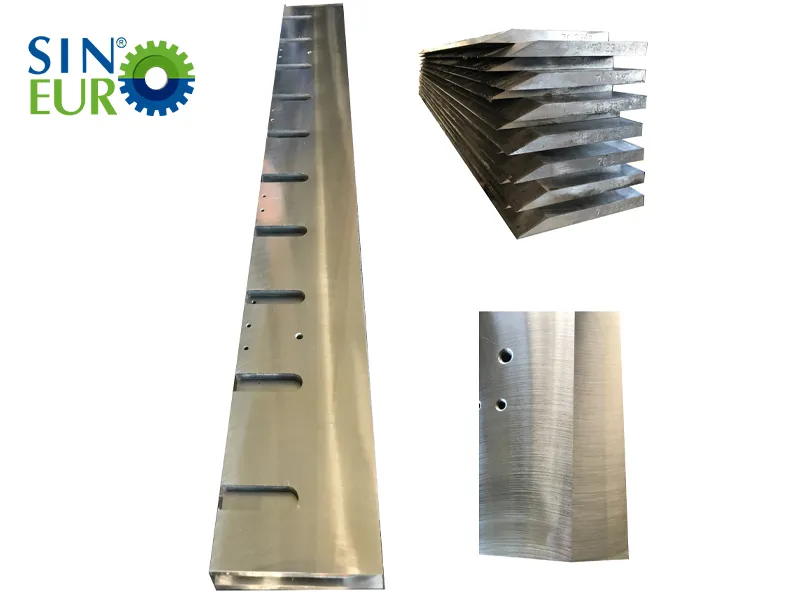
If you're dealing with Knife and Blade for Veneer Peeling, there are some extra things to keep in mind. These blades are often very sharp and have a specific edge profile. When straightening them, you need to be extremely careful not to damage the cutting edge. Any small nick or unevenness on the edge can affect the quality of the veneer cut.
Veneer cutting knives, like the ones you can find at Veneer Cutting Knife, are designed for precision work. So, after straightening, you might need to re - sharpen the blade to ensure it cuts smoothly. You can use a sharpening stone or a professional sharpening machine for this.
When to Replace the Blade
Sometimes, straightening a bent blade isn't the best option. If the blade has a lot of rust, or if it's been bent and straightened multiple times, it might be time to replace it. A worn - out blade won't give you the same cutting performance, and it can be dangerous. As a blade supplier, I always recommend using high - quality blades. They're more likely to resist bending and will last longer, saving you money in the long run.

Maintenance to Prevent Bending
To avoid having to straighten your knife blades in the first place, proper maintenance is key. Store your blades in a dry, cool place. Make sure they're not in contact with other hard objects that could cause them to bend. When using the blades, follow the manufacturer's instructions. Don't try to cut materials that are too tough for the blade.
Conclusion
Well, there you have it, folks! That's how you can straighten a bent knife blade. It takes a bit of patience and the right tools, but it can be done. Just remember to be careful and assess the damage properly before you start. And if you're ever in doubt, it's always a good idea to consult a professional.
If you're in the market for new knife blades, whether it's for veneer peeling or other applications, I'd love to help. We've got a wide range of high - quality blades that are designed to last. Reach out to me, and we can have a chat about your specific needs. Let's get you the perfect blade for your work!
References
- General knowledge from years of experience in the knife blade supply industry.
- Practical tips learned from working with various types of blades.